A parent turning over their kid is positioning substantial rely on you. They seldom claim it out loud, yet the underlying concern is constantly the very same: if something goes wrong, will certainly you recognize what to do in the first 2 minutes?
That is the genuine purpose of child care first aid training. Not a certificate on the wall, not another tick in a conformity spreadsheet, yet the self-confidence to act quickly, smoothly and properly when a youngster's life or long‑term wellness depends upon your next decision.
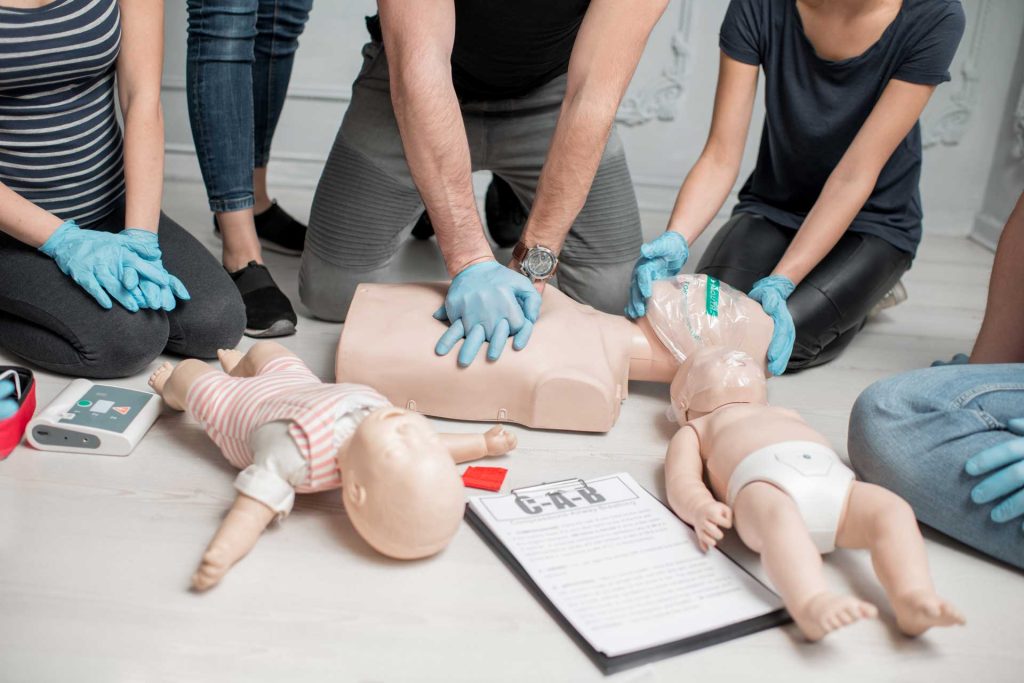
Express child care first aid courses and fast CPR refresher training goal to supply this skills on a limited timetable. Succeeded, they function. Done terribly, they provide an incorrect sense of security. The distinction lies in the top quality of the training, exactly how honestly it mirrors reality with kids, and whether it prepares you to believe, not just to pass a test.

I have educated first aid and CPR training to baby room groups, childminders, sports trains, foster carers and parents for several years. The pattern is consistent: emergency situations with youngsters hardly ever resemble the circumstance cards. They are noisier, messier, even more complicated and much more psychological. The right first aid course prepares for that.
This overview undergoes what every carer needs to genuinely have the ability to do after express child care first aid training, just how express first aid and CPR courses are structured, and what to look for when selecting a fast first aid course near you.
Why child first aid is various from adult very first aid
Many people reach first aid and CPR training reasoning, "I did a first aid course at work a couple of years ago; undoubtedly that covers youngsters too." It does not, a minimum of not adequately.
Children are not just smaller adults. Their respiratory tracts, breathing patterns, physiology and psychological reactions are various, and one of the most typical emergency situations are various too.
A few examples that constantly stand apart in class:
- Infants and young children choke even more often than adults, often silently. Breathing issues, especially asthma and viral wheeze, dominate numerous child care emergencies. Allergic responses can intensify from mild rashes to life‑threatening anaphylaxis in minutes. Head injuries in children are incredibly common, but identifying when to fret is nuanced. Cardiac arrest in children is far much less typical, yet when it occurs, it is generally additional to breathing problems or trauma, not a primary heart issue.
An express child care first aid course has to recognize these differences. A common fast first aid course that only skims child‑specific problems could be fine for workplace staff that see kids periodically, yet not for early years professionals, childminders or after‑school club leaders.
If you care for youngsters consistently, you need first aid training that spends serious time on paediatric scenarios, not just a quick add‑on at the end of a grown-up course.
What "express" child care first aid training need to still cover
"Express" or "fast" in this context should define the method the course is delivered, not the depth of vital material. The moment savings typically come from mixed discovering, tighter schedules and concentrated training, not from reducing vital topics.
At an absolute minimum, express childcare first aid courses for carers need to leave you confident with:
Assessing a youngster quickly and safely Managing a less competent youngster Paediatric CPR and use of an AED Choking in infants and children Breathing problems and asthma assaultsIf a service provider is advertising an express childcare first aid course that does not plainly include every one of these, treat that as a warning sign. Added essentials like hemorrhaging control, burns, allergies, seizures and head injuries ought to also include, however those 5 items are non‑negotiable.
When centres advertise fast first aid courses or express first aid training, ask straight for how long is invested in paediatric circumstances, hands‑on CPR method and choking drills. Genuine skill needs rep and feedback, and you can not press that constantly without shedding quality.
The core skills every childcare carer should in fact master
Not every first aid certificate reflects real skills. The goal is not simply to endure first aid training, yet to leave able to execute certain skills under pressure.
Rapid evaluation: checking out the situation in seconds
The very first thing an excellent express first aid course shows is not a plaster method, but exactly how to approach any occurrence without cold. The psychological sequence you wish to internalise goes something like this:
First, look for danger to you, the child and others. Childcare cases usually take place in play grounds, on steps, near warm beverages or in parking lot. If you hurry right in, you take the chance of adding a second casualty.
Second, get a fast impression. Is the youngster awake? Breathing? Making noise? Relocating typically? Colour normal or pale/blue? Are they reacting to you or to pain?
Third, call for suitable help. This might be an additional staff member, a manager to contact parents, or the emergency situation services. Express childcare first aid training should provide you clear criteria for when to call emergency situation numbers, when to go directly to urgent care, and when to observe and document.
Without this structured evaluation, also good technological skills can be misapplied or delayed.
Paediatric CPR: compressions, breaths and AEDs
CPR courses for child care need to concentrate on child‑specific methods. The proportions of chest compressions, the focus on rescue breaths, and the hand placement all modification with age and size.
You needs to anticipate to exercise:
- Infant CPR, normally on an infant manikin, utilizing 2 fingers for compressions and gentle puffs for breaths. Child CPR, usually utilizing 1 or 2 hands depending upon the child's size. How to adjust in between infant, kid and adult CPR if you look after a mixed‑age team, as in some clubs or vacation schemes. Using an AED securely on a child, including appropriate pad positioning and when to use paediatric pads if available.
Express CPR courses that integrate grown-up and kid abilities can function well if they offer sufficient different technique time on paediatric manikins. A fast CPR correspondence course, often taken by returning staff, need to concentrate on restoring muscle memory through repeated, practical technique rather than long lectures.
What issues most is not that you remember every fine information 6 months later, but that the course leaves you with a psychological and physical photo you can remember rapidly when stress hits.
Choking: the scenario that occurs much also often
Child choking events are both typical and frightening. Every early years or child care professional I recognize contends the very least one story, whether it was a complete blockage, a near‑miss, or a child that breathed in a small object.
Express child care first aid training needs to go beyond "back impacts and breast drives" as a formula. It should stroll you through:
- The distinction between partial and total blockage, and when to motivate coughing versus intervene. How choking presents in infants who can not stand or talk. How to support the infant securely along your upper leg or forearm to supply efficient impacts without wounding them. The series for abdominal thrusts in older kids, and why they are not used in tiny infants. What to do if a youngster becomes unconscious while choking, and the web link between choking administration and CPR.
You needs to end up the first aid and CPR course having practiced these activities consistently, not simply viewed a demo. Lots of carers say the choking drills are the single most beneficial part of their express first aid courses.
Breathing difficulties, asthma and anaphylaxis
In child care setups, problems with breathing are extra frequent than cardiac arrests by a massive margin. Asthma, viral wheeze, croup, extreme allergic reactions and anxiousness can all present as "having a hard time to take a breath", but the reactions differ.
A well created express childcare first aid course instructs you to identify red‑flag patterns, such as:
- A child speaking just in single words, or unable to speak. Obvious sucking in of the skin between the ribs or at the base of the neck. Noisy breathing that suddenly comes to be quiet. Blue or grey tinge around the lips or fingertips.
You first aid pro Sunshine Coast needs to be comfortable helping with suggested inhalers and spacers, and recognize the standard distinction in between a reliever (usually a blue inhaler) and preventer medications. For anaphylaxis, express first aid training should include exercise with auto‑injector fitness instructors, covering various brand names and just how to take care of when adrenaline is given.
The first aid certificate suggests little if, when faced with a youngster whose breathing is clearly wearing away, you wait because you have never ever really held an auto‑injector in your own hands.
Injuries you are statistically most likely to see
Express childcare first aid courses often infatuate on unusual, remarkable occasions, while skimming past things you will certainly fulfill in reality, week after week. A well balanced course must attend to both.
From years of incident reporting in baby rooms and schools, a couple of patterns emerge.
Minor head injuries are extremely usual, due to falls from standing, low furniture, play ground tools or harsh play. The difficulty is working out which children require urgent health center assessment and which can be securely observed. Training should cover indication such as duplicated throwing up, unusual sleepiness, seizures, complication, getting worse headache or behaviour that is clearly out of character.
Cuts and hemorrhaging occur regularly, particularly on faces, lips and scalps, which bleed greater than a lot of carers anticipate. First aid training needs to help you judge when easy stress and cleaning is enough, and when a youngster most likely requirements stitches, adhesive or steri‑strips. It needs to additionally attend to the sensible concern of taking care of other children in the room while one is hemorrhaging visibly.
Burns and scalds in child care typically come from hot drinks, radiators, food preparation tasks or exterior tools on bright days. Every express first aid course ought to strengthen the relevance of early, long term air conditioning with amazing running water, and the appropriate use of dressings or cling film. I have lost count of the number of times I have seen well‑meaning team apply ice straight, butter, tooth paste or thick creams, all of which can make evaluation and healing worse.
Sprains, presumed fractures and joint injuries often tend to comply with drops or sports activities. The top priority is assistance, convenience, and stopping more damages, plus documenting exactly what happened and what was done next for parents and healthcare professionals.
Good first aid and CPR training classes do not just detail these injuries; they use real‑world examples, images (sensitively picked), and scenarios drawn from childcare settings to make sure that learners recognise cases when they happen.
How express courses compress time without losing quality
Fast first aid courses and express CPR training often elevate an apparent worry: is it really feasible to cover so much in a shorter time?
The better providers use 3 major strategies.
First, mixed knowing. Participants complete concept content online in their own time prior to a shorter, firmly focused functional session. This works well for subjects like basic makeup, easy interpretations and legal obligations. The in‑person session can after that invest almost all of its time on hands‑on CPR, choking drills, wrapping and circumstance work. When done correctly, an express first aid course can supply the very same core skills as a longer traditional course, with much less class sitting.
Second, concentrated, appropriate material. In child care, there is no requirement to invest half an hour on commercial crush injuries or chemical burns if those dangers do not exist in your setup. A fast first aid training session that is plainly tailored to nurseries, clubs or colleges wastes far less time than a common workplace first aid course.
Third, limited group monitoring. Little teams on each manikin, clear timings for drills, and trainers who keep pace while still addressing questions. Express first aid training lives or passes away on how regimented the fitness instructors are with timing.
The warning is any express childcare first aid course that insists everything can be carried out in, state, 90 minutes, including analysis, certification and breaks, with no prior understanding. That is usually "fast certification" in the most awful sense, and it displays in the self-confidence of the participants.
What a strong childcare first aid session seems like on the day
People usually ask what to expect from express child care first aid training if they have only ever before attended long, common classes.
A normal blended express first aid course could appear like this:
Before the day, you complete 1 to 3 hours of on-line product. This covers standard first aid principles, legal duties, infection control, and an introduction to paediatric composition and typical conditions. Short quizzes inspect understanding, and you arrive with some shared vocabulary.
On the day, the practical express first aid training competes a number of hours. Early, you obtain utilized to assessment regimens and secure methods, typically by going through several short, easy circumstances. After that the fitness instructor relocates right into CPR and AED use, with plenty of time on infant and kid manikins.

After a break, you focus on choking, taking a breath emergencies, allergic reactions and bronchial asthma. The trainer will certainly usually rotate you via stations: choking drills at one, inhaler and spacer presentations at another, auto‑injector practice at a third.
The final part of the first aid and CPR course usually covers typical injuries, blood loss, burns and head injuries. Preferably, fitness instructors associate this to your own setting. A baby room will certainly deal with different patterns of incidents than a senior high school sporting activities club. Time is alloted to clarify your securing and reporting responsibilities after an incident.
Assessment is usually recurring rather than a challenging final test. In numerous modern-day express first aid courses, fitness instructors sign off abilities as they observe you executing them correctly.
When you leave, you must not really feel like an emergency situation doctor. You should really feel able to begin efficient first aid and to communicate plainly with moms and dads and paramedics about what you have actually seen and done.
Picking a credible training provider
Searching for a fast first aid course near me or express childcare first aid courses will return a long list of options. Some are superb, some serve, and a few are inadequate sufficient that I would certainly not want my own youngster in the treatment of any individual they certificate.
A quick list assists when you talk with service providers:
- Are the trainers experienced with children, not just with first aid? Ask whether they have operated in childcare, institutions, paediatrics or emergency situation services. Is the course identified or approved by a reputable body in your area? Ask particularly which certification you will certainly receive. How much time is hands‑on? If most of the day is lecture‑based, that is not perfect for an express course. How several individuals per manikin and trainer? High proportions weaken method and feedback. Does the material plainly match your setup? Nurseries, childminders, sports clubs and property treatment all require a little various emphases.
For existing team, fast CPR refresher courses can be a valuable way to keep skills sharp without losing a complete day. Simply make certain that refreshers still include genuine practice, not just seeing a video.
Certificates, legal responsibilities and what they do not show
Most express childcare first aid training causes a first aid certificate valid for a specific period, often one to 3 years. Companies naturally focus on keeping these certificates in day. Regulators typically demand minimal varieties of team with existing first aid and CPR training classes.
There are, nonetheless, a couple of unpleasant truths that experienced trainers recognise.
The first is that ability decay is actual. CPR quality and self-confidence in handling choking beginning to drop within months for lots of people who rarely method. That is why short, concentrated refreshers, also informal ones within a setting, can be so important between formal courses.
The second is that a first aid certificate is evidence that the person participated in and satisfied the analysis standards at that point in time. It is not evidence that they will certainly perform perfectly under anxiety. Society, leadership and routine drills within the childcare setup matter just as much.
The 3rd is that lawful compliance and genuine safety and security are not the same. You can technically satisfy necessary varieties of qualified very first aiders while placing them all on the same flooring, or on certain shifts. Risk analyses must affect the number of personnel embark on first aid courses and where they are deployed.
When you purchase express childcare first aid training, deal with the certificate as the start of a procedure, not the end. Construct technique into staff meetings, encourage individuals to share near‑misses, and deal with every actual occurrence as a possibility to review and learn.
Simple steps to comply with in any kind of child care emergency
Despite the range of situations express first aid courses cover, most childcare emergency situations gain from a simple, repeatable sequence.
Here is a sensible framework that lines up with modern-day first aid and CPR training:
Pause and shield. Take one breath, check for danger, action threats or move the youngster if needed. Check response and breathing. Speak to the kid, faucet gently, search for regular breathing and movement. Call for assistance early. Yell for a colleague, phone emergency situation solutions if severe, and ensure somebody notifies parents. Start the ideal basic intervention. This might be positioning, stress on an injury, cooling a burn, helping with medication, or CPR. Keep corresponding. Reassure the youngster, describe to bystanders what is occurring, and hand over clearly to paramedics or parents.Express first aid and CPR courses exist to make those actions automated. When team from the exact same nursery or club train with each other, they can also appoint duties beforehand. A single person leads treatment, an additional handles the atmosphere, a third deals with communication and paperwork. That teamwork is what protects against disorder in a real emergency.
Final thoughts: what "sufficient" truly means
No child care professional must feel they have to become a clinical expert. Your role in first aid pro Caboolture an emergency is to connect the space in between occurrence and professional treatment, utilizing straightforward first aid principles.
Well developed express first aid courses and express child care first aid training respect the restraints on your time while taking that duty seriously. They concentrate on the scenarios you are more than likely to deal with, they drill the skills that actually save lives or prevent handicap, and they provide you enough method that your hands recognize what to do even when your heart is racing.
If you are responsible for preparing training, deal with generic, ultra‑quick first aid certification with caution. Ask detailed inquiries, insist on paediatric‑specific material, and select providers whose fitness instructors plainly understand the facts of dealing with children.
If you are participating in as a carer, enter prepared to practice, to ask awkward concerns, and to associate each scenario to your very own environment. A few concentrated hours of authentic express first aid training can make the distinction in between panic and deliberate activity on the day you wish never ever comes.